Rabu, 20 Maret 2013

A Unified Software Development Lifecycle

|0 komentar

Recently, in response to an audit, I was asked to document our Software Development Lifecycle across all our platforms - clinical, financial, and web.    Here's what I wrote.  I hope you find it useful.

1.  Project Definition

Multi-stakeholder governance bodies of business owners and IS professionals meet on a regular basis to define the scope and requirements of new projects.    The priorities of these new projects are based on business owner strategic alignment, regulatory/compliance requirements, quality/safety imperative, impact factor (employees, clinicians, patients),  and return on investment.    Governance Committees with oversight over the software development life cycle include:

Clinical - webOMR User's group sets ambulatory development priorities.    Inpatient Clinical Applications Steering Committee sets inpatient development priorities.

Financial/Billing - IS project manager and IS fiscal manager work with Patient Financial Services stakeholders to mutually agree on the work tasks of all programmers.

Financial/Supply Chain Manaagement/Research/ERP -  Human Resources/Payroll, General Accounting, Research Finance and Supply Chain Management Steering Committees set Peoplesoft and related application priorities

Web Applications  - the Portal steering committee sets web development priorities

Once a project is approved by a governance committee, it is assigned a tracking number and assigned to programmer

In addition to project definition, these committees also oversee the portfolio of work their specific domain.    This includes monitoring progress and identifying/eliminating barriers to success.

2. User Requirements Definition, Analysis and Design

The development process for approved projects begins with user requirements definition.   This is a collaborative effort involving developers, analysts and business owners.  It is an iterative process in which a prototype is developed based on an initial set of user requirements and then modified in response to user feedback.   Multiple cycles of revising requirements and prototypes typically occur.   We employ an agile development methodology with source code control systems/versioning for every development platform.

3.   System requirements definition

Application projects may have infrastructure implications.   An infrastructure project manager is engaged if additional server capacity, novel desktop configuration, or new client hardware (mobile, specialized printers, bar code scanners) is required as part of the application

4.  Testing

BIDMC maintains dedicated development and testing environments that are separate from live/production.     Developers first unit test their changes.   Application analysts independently test changes.    End users perform acceptance testing.

Test scripts are used to perform integrated testing before go live.

No code is moved into production before end user signoff approval.

5.  Go live and continuous improvement

Go live is planned in collaboration with business owners which includes communication and post go live support planning.     Changes to infrastructure and communication plans for major go lives are presented to the IS Change Control Board to ensure awareness and coordinate timelines among all IS projects.

The push of code from a testing environment to a production environment is done via a source control system, is logged for auditing purposes, and may be rolled back quickly.   For clinical applications, this push is done by the most experienced developer, as experience has shown that this person is most able to ensure a successful deployment and rapidly identify any defects, minimizing risk.   For financial/billing  applications, this push is done by the non-IS Production Control group, since mainframe workflows are more batch oriented and more amenable to segregation of duties in go live processes.   The organization accepts this difference between the clinical and financial/billing go live process as necessary to reduce overall risk.

Once the go live push is completed, success of the process is validated by the most experienced developer, the analysts, and/or the business owner as is appropriate for the application.

Based on feedback during the go live validation process, a rollback may be done if there are unexpected consequences.  This is a very rare event, but it supported by the source code control systems which drive the go live process.

Once application  changes are live, user feedback is provided at the governance committee level and products are continuously improved to meet users needs, always following the above Software Development Lifecycle.


recomended product suport by amazon

Selasa, 19 Maret 2013

Thank You to the Village

|0 komentar

From March 8 to March 17, I was focused entirely on my father - from serving as his healthcare navigator to arranging his funeral/memorial to ensuring my mother had a path forward.

For 10 days, I had to minimize my roles as a CIO/professor and maximize my roles as son/clinician.

I cancelled numerous meetings, speaking engagements, and classes.  I backed out of commitments made months ago.   My response to calls/emails/texts went from minutes to days.

All of this was necessary and appropriate to support my father.

Now that I'm back in Boston and restarting my usual schedule, I can say that the past 10 days were only possible because of the incredible outpouring of support I received from the village of people around me.

My wife and daughter flew to Los Angeles to support my father, my mother, and me.

My parents' friends brought food to the hospital, helped with funeral arrangements, and provided emotional support.

My  staff at BIDMC covered for me in all my meetings and phone calls.   Nothing bad happened and no urgent issue was overlooked.

My colleagues in the State and Federal government ensured the cadence of all our work continued without me.

The lessons learned
*Family must come first
*There is no work related urgency that trumps a focus on major life events
*The people who surround you in life make all the difference

Thanks again to the people who supported me.   I've now completed all the tasks surrounding my father's death - from comfort care, to cremation, to memorial, to preparing  the house for my mother's needs, to working on all the financial/administrative matters surrounding the death of a father/spouse.

The healing will take time, but with the great people who came together over the past 10 days, I'm confident that all will be well.


recomended product suport by amazon

Kamis, 14 Maret 2013

Building Unity Farm - "Planting" the Mushroom Farm

|0 komentar
As I mentioned last week, we're planting the orchard and developing a mushroom farm this Spring.

What is the scope and scale of the mushroom farm effort?

We've cut 200 feet of poplar trees that were too near our buildings for safety.   I chainsawed the trees into 12 four foot logs that 6-8" in diameter and 60 two foot logs that are 8-12" in diameter.  

Poplar is an ideal substrate for oyster mushrooms.    Our mushroom farm supplier, Field and Forest Products, recommends the "totem" method for inoculating poplar.

Here's what I'm planning for the last week of April.

I've cut 192 feet of pine 2x4s into 16 inch segments.  These boards will serve as the bases for 72 "totem poles".     I'll cut the 4 foot logs into three 16 inch segments.   I'll cut the 2 foot logs into 12 inch segments.   I'll lay down the 2x4 bases every 33 inches to create a 200 foot line in the moist and shaded area of our north wood.   I'll place a large trash bag on top of each base the generously add sawdust inoculated with oyster mushroom mycelium (spawn).   I'll add a log, add more spawn, add a log, and seal the totem pole in the trash bag to establish the perfect environment for growing mushrooms.

Field and Forest Products supplies 6 different subspecies of oyster, so we'll inoculate 12 totems with each type.

I've cut 25 four foot oak 3-6" oak logs from trees damaged during Hurricane Sandy for Shitake growing.   As we clear an acre for the orchard, we'll have enough oak for 220 logs arranged as 11 stacks of 20 logs.   I'll place one stack every 18 feet in the 200 foot mushroom growing area of our north wood.   I've cut 88 feet of pine 4x4s into four foot segments to serve as bases for the stacks.

Field and Forest Products supplies 11 different subspecies of Shitake, so we'll inoculate each stack with a different species.  Inoculating requires drilling 1.5 inch deep holes every 4 inches around the entire circumference and length of each log.    For 220 four foot logs, that means  220 logs * 4 feet/log * 12 inches/foot * 1 hole/4 inches for each row around the circumference * 4 rows  = 10,560 holes.

How do you use a drill to make 10,560 holes?   You don't.   You use an 8000 rpm grinder retrofitted with a drill chuck and high speed bit.   In my case, I'm using the Makita 9557pb with the Field and Forest chuck that attaches to the 5/8" inch coarse threads of the grinder.

I will fill these holes with sawdust spawn using a special inoculator then seal the holes with 25 pounds of melted food grade paraffin.

The entire process for processing the poplar and oak logs will be done in three weekends at the end of April and the beginning of May.

I've completed the survey work, the brush clearing, and layout of the mushroom farm.  I have all the tools and technologies I'll need.  The rest is the muscle power to process a few tons of wood into a production configuration.

We may see some fruiting this Fall, but likely next Spring we'll have our first mushroom harvest.   Like our Orchard, we've chosen subspecies that fruit at different times in different conditions so we'll have yields throughout the season when the temperature is over 40 degrees.   If we're lucky this batch wood of yield for many seasons, so the "heavy lifting" only needs to be done every 5 years.


recomended product suport by amazon

Rabu, 13 Maret 2013

The Use of Scribes for Clinical documentation

|0 komentar

Given the rigors of documentation required for Meaningful Use, quality measurement, and ICD10, some organizations are adding dedicated scribes to rounding and evaluation teams.

I was recently asked two questions about scribes.

Does Meaningful Use allow the use of scribes?

Meaningful Use does not specify who does the documentation, as long as the thresholds for data capture are exceeded.

What are the best practices for scribes used at BIDMC?

At BIDMC the ED scribes use their own credentials and create a "scribe note" under their own identity.

When the physician goes to chart, they have the option to import the scribe note into their own note.

This has 3 important benefits:

1) The scribe is never given access to the system with the physician's credentials (as I've heard happens with some scribe arrangements)
2) The physician has the option to import and then writes/edits the note as they wish (ie - they retain full control for the contents of the note)
3) The MD actively uses the computer and the scribe does not come between the physician and system.  (In some arrangements the scribe acts as a human UI to the system and the MD only interacts with the scribe.  This becomes a barrier to many of the benefits of online clinical decision support).

Although future improvements in clinical documentation may eliminate the need for scribes, there are best practices that minimize privacy risks and "cut/paste" documentation challenges.


recomended product suport by amazon

Selasa, 12 Maret 2013

Use of HIE Fully Integrated into the EHR

|0 komentar
Note - while I was flying to Los Angeles to be with my father, I wrote the Tuesday-Thursday blog posts which will be automatically published this week.    I'm focused on his care now and will return to writing in real time once his needs have been met.

John
-------------
I recently reviewed an article which lamented the low adoption of portal-based HIE that requires clinicians to log into a website outside of their normal EHR workflow to lookup patient information from external facilities.  Typical usage in this article was cited as 10%.

At BIDMC we've implemented several types of interoperability that is integrated into standard EHR workflows at the click of the button - no additional login or patient context specification required.

How often is it used?   As an example, we looked at the lookups from BIDMC's EHR to the Atrius' Epic applications.  As denominator, we counted all adult admissions from 1/1/12 - 9/30/12 that had an Atrius PCP or referring MD.

There were a total of 6,017 Atrius admissions.

Of these, our audit logs show that 3,455 or 57% had an Atrius Epic viewer lookup used during the admission, between the admit and discharge date.

57% for simple integrated viewing verses 10% for community wide aggregation available via a separate website.

This was not intended to be an exhaustive or controlled study.  However, it is interesting that simple viewing of external records, fully integrated into the EHR, addresses many clinician requirements for care coordination.

I'm confident that the next generation of HIE such as the work of the Commonwealth of Massachusetts to create a statewide master patient index/record locator service and the nationwide CommonWell Alliance http://www.commonwellalliance.org by a consortium of vendors will empower additional fully EHR integrated solutions.


recomended product suport by amazon

Senin, 11 Maret 2013

Celebrating my Father's Life

|0 komentar

As I sit at my father's bedside, managing the increasing heaviness of his breathing, I'm doing my best to keep his lips moist, his extremities warm, and the dosing of his comfort care medications appropriate so there is no air hunger.

People from my parents' past are calling and emailing me, telling me their stories and reveling in the impact my father had on their lives.  They've told me:

He inspired them to go into engineering (he's a patent lawyer trained as an engineer)

He inspired them with his kindness and gentleness

His tenacity living with multiple sclerosis for 23+ years inspired them to approach their own illnesses with vigor

Some of the stories people remember:

When I was 13 in 1975, my father got me my first summer job, working at defense contractor TRW.   I developed satellite telemetry parsing software in Fortran, working in the same building as Chris Boyce (the Falcon and the Snowman) .  My father's effort to give me powerful computer resources in the 1970's changed the course of my life.

One of my father's friends recalls the joy my father felt when he and I built electronics projects together throughout the 1970's  - a metal detector, early analog signal processing experiments such as voice synthesizers, and an Altair 8800

I have many special memories of life with my father, many of them forever preserved on Kodachrome:

My father was in the Air Force from 1963 to 1968, so we traveled extensively.

One of my earliest memories was playing on a Oahu beach in Hawaii  in 1963 with my father when he was stationed near Pearl Harbor.   As a child the ocean was always a favorite place.

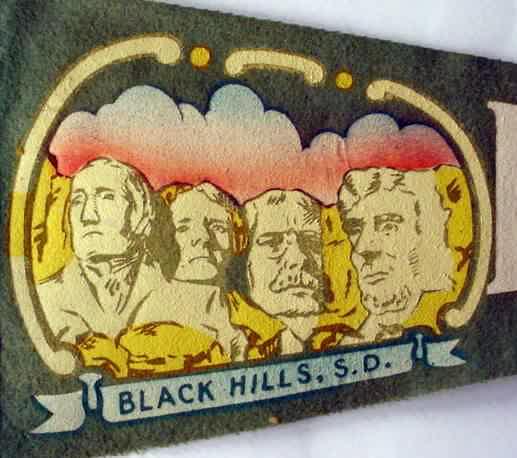
We typically drove across country in an old Buick from Air Force posting to posting.   My father took me on a cross country drive from New Jersey to Colorado Springs via Mt. Rushmore in 1964 and I collected wool souvenir pennants along the way.   I learned to love life on the road.

He was stationed near Pensacola, Florida and we lived on the beach in 1965.  We walked the surf line every morning to find sharks, starfish, and conch shells washed upon the shore.   I developed a love of natural history and exploring.

In 1966, we sat together to watch a new kind of television program - Star Trek, when it first aired in prime time.   Since then, I've watched every Star Trek episode and film multiple times.

In 1968, we moved from Willingboro, New Jersey to Torrance, California.   We lived in a one bedroom apartment with the family dog, a terrier named Shakespeare.   One night Shakespeare became very ill and my father drove with me  in the middle of the night, looking for an emergency veterinary hospital, cradling the dog on his lap as he steered the old Buick.

In 1970, I read about linear accelerators in the World Book encyclopedia.   I decided to build one at home and my father helped me by going to a local high school machine shop to fabricate parts.    I was the only third grader to exhibit atom smashing technology and won the science fair.

In 1972, my father and I built model rockets together and drove to the desert to launch them.   The early 1970's were a different time - somewhat dangerous chemicals and rocket fuel were available without restriction.   Luckily, we did no harm to ourselves during our adventures.

In 1973, we built a metal detector together, carefully soldering each transistor into a circuit board.   I used it to find lost change on Redondo Beach.

In 1974, I found an old minibike in a local junkyard.   The engine was largely destroyed by fire.   My father and I rebuilt it, buying parts  as spare funds became available.   By 1975 I was riding it in a nearby parking lot.  Since then I've had a lifelong desire to tinker and fix things.

In 1976, we hiked extensively in the Santa Monica mountains - the most nature you'll find in Los Angeles (think of the set from M*A*S*H).   For most of my life I've been a hiker, climber, and explorer.

In 1977, we road our bicycles, loaded with gear, from Palos Verdes to Santa Barbara, camping along the way at Point Mugu State Park.  I will never forget our attempt at making pancakes on a backpacking stove with a bit too much olive oil.   Gooey fried dough is appealing if you are hungry enough.

In 1980, when I graduated from high school, we visited Kauai and hiked the Napali Coast trail.   I remember that we confused wild Kukui nuts with Macademia nuts.  The laxative properties of Kukui nuts are profound.

In 1980, my adult life began and I attended Stanford, UCSF, and UC Berkeley for years of undergraduate and graduate training.   I still shared every experience and tribulation with my father.   He subscribed to Science and Nature so that he could discuss the latest scientific advances with authority.

In 1990, he was diagnosed with multiple sclerosis, and over 23 years progressively lost lower body strength.    He fought the good fight and only this year bought his first wheelchair.

My role at the moment is to keep him comfortable and celebrate his life, reflecting on the profound impact he had on everyone around him.  Over the past day, I've told him all the stories above.   At one time in the night, I told him that I loved him. He opened his eyes and whispered, "I know".   Since then, he's been resting.  The muscle spasms of multiple sclerosis have stopped, and his breathing remains unlabored.


recomended product suport by amazon

Minggu, 10 Maret 2013

What is Compassionate Comfort Care?

|0 komentar

Over the past 24 hours, my family and the hospital care team have been guided by my father's healthcare proxy to avoid painful, invasive, or aggressive care at time when his multiple medical issues have combined to make his health decline irreversible.

The healthcare proxy was extremely clear and enabled us to finalize the do not resuscitate and do not intubate orders.   We agreed to stop monitoring and stop all medications except those needed for comfort.    We agreed to stop drawing labs.

We want to ensure his comfort and avoid needlesticks/procedures that will cause him anxiety.

But there are other decisions to make.

His bone marrow has stopped producing red blood cells and his hematocrit has dropped to 22.

His heart attack on Friday caused such damage to his heart that the volume of blood per heartbeat is less than half of normal.  His lungs initially filled with fluid but are now clearing.

Given his low hematocrit, do we give him blood?

Although it may enhance his overall feeling of well-being it will likely fluid overload him and make breathing more difficult.

Do we give him IV fluids?

He was fluid positive over the past 24 hours, so we have to delicately balance the notion of keeping him hydrated with fluid overloading him.

Do we consider a feeding tube?

His platelet count is 37 and bleeding caused by the trauma of inserting the tube is a risk.  Feeding tubes are irritating and might require us to apply restraints.

These are difficult decisions to make as a doctor and a son.   It is very challenging to be objective when the questions are about your own father.

When thinking about what provides him the most compassionate care, there is also a need to weigh the family's beliefs about comfort with my medical experience.  Feeding sounds like compassionate comfort, but the pain and anxiety caused by feeding tube insertion and maintenance may not be.

So where are we on the journey and what decisions have we made for my father's care?

At this time we have discontinued all tubes, all wires, all restraints - anything connected to his body except a single IV line which is used for comforting medications.

We've moved him to a sunny room with a wonderful view and enough space for family and friends to visit.

We've changed his comfort medications to a constant infusion rather than as needed dosing.

We're giving him just enough fluids to keep him in even fluid balance.

My mother and I have divided up the 24 hour clock so that we're with him constantly and each of us can get 4 hours per day of sleep.   A rested caregiver is better able to make compassionate decisions.

I wish there was a single definition of compassion comfort care that could simply be ordered.   My experience over the past few hours suggests that the patient's wishes, the family's beliefs and the care team's advice all must be combined to arrive at an optimal answer.    Since Friday, we've made stepwise decisions that were not clear or obvious at the beginning of the process.

My father is resting comfortably and I'm telling him stories from the best memories of our lives together.   I know he's listening.


recomended product suport by amazon

Sabtu, 09 Maret 2013

Serving as Healthcare Navigator for my Father

|0 komentar

On Friday at noon, I received a call from my father's cardiologist that I should fly to Los Angeles urgently - "your father has had his third heart attack, his heart is pumping at half its usual volume, and the combination of multiple medical problems requires rapid decision making."

20 inches of snow had fallen in Boston on Friday morning, delaying and canceling many flights.

The beginning of Spring break meant that just about every Friday flight was oversold to reveling college students.

I was able to get a Jet Blue flight scheduled for 7pm, delayed to 9pm.  At the airport, I went standby and flew on the 5:30pm, leaving at 7pm.

Once in California, I rented a car and drove to the ICU, arriving at midnight local time, 3am Boston time.   My father's vital signs were stable but there was much to do.

Given everything that happened in 2012 - Kathy's breast cancer, my mother's broken hip, and health issues with my father in law,  I declared a family goal to have all wills, trusts, powers of attorney, healthcare proxies, and an open discussion of care preferences done by the first week of March.   My parents and I worked through  a review of their legal documents, an inventory of their preferences, and an accounting of their assets in mid-February so we were well prepared for Friday's events.

At the moment, I'm in the ICU watching the rise and fall of my father's chest as he breathes on his own after a night on a BPAP machine.    I've taken my mother home to rest.  I'm holding my father's hands whenever he becomes agitated.   He knows I am here but cannot converse.  Today would have been too late to have discussions about his care preferences.

Decisions we've just made are to treat my father per the preferences he wanted - no chest compressions, no intubation, and no pressors.

Difficult discussions our family has had this year included:

Do you want to live at home as long as possible including visiting home care or hospice nurses?

Do you want to be buried or cremated?  A funeral or memorial service?

Where do you want to live after the death of a spouse?

Now that I'm living through the implementation of these decisions, hour by hour, I am so thankful we had the discussions, created the documents, and shared our work with appropriate lawyers, accountants, and family.

As I sit here, his vital signs are stable, his drips have been stopped, and he is comfortable.

I've worked with a remarkable care team - my mother, a hospitalist, an intensivist, a cardiologist, and nurses to implement our jointly developed care plan.

It's hard to know what the days ahead will bring, but I will sit by father's side, following his wishes, ensuring that he knows that his family loves and supports him.   I will ensure he has no pain and no fear.   I will celebrate the gifts he has given me and others.   I'm reading him notes from my wife and daughter.

It's an awkward time to post a blog, but if my journey over the next several days with my father encourages others to prepare for these events (this website is very helpful), my father's life will have made an even greater impact.   Making a difference is a great legacy.


recomended product suport by amazon

Kamis, 07 Maret 2013

Building Unity Farm - Planting the Orchard

|0 komentar

As Spring approaches, Kathy and I are diligently planning the fruits and vegetables of Unity farm. Our first year on the farm was about creating infrastructure and building the animal herds. Our second year will be about expanding the scope to include an extensive orchard, raised beds, a greenhouse, a hoop house/high tunnel, and mushroom farm.

We're working with the town of Sherborn on an overall land management plan, respecting all wetland borders, setbacks, and regulations.   They town already approved the cutting of poplars for the mushroom farm.

We've resurveyed the entire property and marked all wetland borders/buffer zones.  Our next step will be to clear brush and trees outside the borders and prepare the soil for planting the orchard, which is pictured above.

Under the trees, we're planting wildflowers for pollinators and orchard grass for erosion control.

We've avoided slope bottoms/valleys with cold sinks to minimize frost risk. We've created a border of blueberries and raspberries between the orchard and the forest.

The entire orchard will be surrounded by an 8 foot deer fence.   Deer pressure in Sherborn is very high and our neighboring orchard has just fenced 55 acres which means we'll have even more deer foraging on Unity Farm.

The tree clearing begins in the third week of March, to be followed by fencing and planting in April.      By Memorial Day the orchard should be finished.

Also before Memorial Day, I'll have completed the mushroom farm (72 towers of poplar for Oyster mushrooms and 220 oak logs for Shitake).  More details on that design next week.

This Summer we'll add a retaining wall and compost on the north border of our pasture to support the hoop house and greenhouse where we'll grow lettuces, spinach, kale, and root vegetables most of the year.

Last Summer we were still moving in.   The nights and weekends of this Summer will be a great opportunity to create the growing areas we'll be able to harvest for many years to come.


recomended product suport by amazon

Rabu, 06 Maret 2013

My Top Healthcare IT Concerns for 2013

|0 komentar

It's HIMSS week and IT professionals are gathering in New Orleans to find the products and services that solve their application and infrastructure problems.

What are my top healthcare IT concerns during HIMSS week 2013?

1.  Achieving Meaningful Use Stage 2 - at BIDMC we've already exceeded the hospital thresholds for the core and menu set measures of MU Stage 2 per this dashboard, except for electronic medication administration records/bedside medication verification, which we're implementing now per this project plan.    To attest this Fall, we'll need to complete self certification of our application suite (we build and buy so our approach to certification is to use CCHIT's EHR Alternative Certification for Healthcare Providers "EACH" program for all our enterprise applications.)   Once we complete hospital and eligible professional certification, we'll ensure all our stakeholders are educated about the changes we've made in functionality and workflow.    We're on target for an October 1,2013-December 31,2013 reporting period and we have no dependency on vendors since we've created the key software ourselves.

2.  Implementing ICD-10 including clinical documentation improvement - per yesterday's blog the entire organization is focused on several work streams - Technology, Payer/Contracting, Workflow/Computer assisted coding, Education/Clinical documentation improvement - that are needed to make the ICD-10 project successful.   It's not enough just to retrofit systems to capture longer/more complex codes.  The entire approach to documentation and billing must be changed to ensure sufficient detail is captured to justify the codes selected.

3.  Supporting ACO Needs - When I ask stakeholders what they need to be successful in managing Pioneer ACO global capitated risk contracts, they tell me they need an omnibus care coordination and analytic platform that consolidates data from all sites of care during the patient's lifetime to enable care management and real time decision support.    Basically it's HIE plus analytics, but no one knows exactly how it should work and few mature products are available in the marketplace to meet these needs.  Hence the reason, we'll need to build the Care Management Medical Record.

4.  Fulfilling all compliance/regulatory requirements including the new HIPAA rule - In a world of more mobile devices (BYOD), cloud computing, and increased HIPAA enforcement, it's challenging to share more data with more people for more purposes while at the same time keeping it secure.  We have 14 work streams to enhance our security maturity including many enhancements that will go live over the next 90 days.

5.  Managing levels of employee stress - implementing Meaningful Use Stage 2, ICD10, Accountable Care, Compliance requirements, and keeping the operational trains running  day to day puts enormous stress on staff at all levels.   Balancing the scope of projects, the resources required, and the timing which keeps staff excited but not overwhelmed requires continuous course correction.  Try finding that product at HIMSS!


recomended product suport by amazon

Selasa, 05 Maret 2013

Educating the Enterprise about ICD10

|0 komentar

On the list of exciting topics for enterprise-wide motivational meetings, ICD-10 is unlikely to rise to the top.  Starting off your Monday morning with an overview of 79,500 ICD-10-CM and 72,100 ICD-10 PCS codes can be about as exciting as watching grass grow.

Given the impact of ICD-10 on the revenue cycle, quality measurement, and risk adjustment, it's clear that we must educate all stakeholders about the importance of the initiative, the workflow challenges we'll face, and the need to improve our existing documentation.

We kicked off the BIDMC enterprise communication plan in January 2013 and in February, I presented this overview to all directors, managers, and supervisors.

They key take home messages were:
*ICD10 requires that we code and bill differently than we do today
*ICD10 is an FY13 Annual Operating Plan Goal
*The majority of BIDMC revenue is at risk
*Implementation and training will involve every department at BIDMC
*We must be fully live by October 1, 2014

I used several examples to build a lasting impression of ICD-10 such as

*If I go climbing in New Hampshire and crush my wedding ring finger in a rock, my ICD-9 code would be 915.8 "Other and unspecified superficial injury of fingers without mention of infection".   My ICD-10 code would be S60.445A
"External constriction of left ring finger, initial encounter"

*Since injury cause and location are coded separately, it is certainly possible to be struck by a turtle (W5922XA) in a squash court (Y92.311)

*There are initial encounters, subsequent encounters, and sequelae.    Important codes to know are

Bitten by Orca, initial encounter (W56.21XA)

Sucked into jet engine, subsequent encounter (V97.33XD)

and the Hitchcock classic

Bitten by birds, sequelae (W61.91XS)

All recognized the incredible training effort required to get clinicians and coders to apply ICD-10 properly.  More daunting is the need to improve clinical documentation so that it can justify the high degree of granularity possible with ICD-10

As we develop further training materials, posters, and broadcast communications, I'll share them on the blog.


recomended product suport by amazon